



Inside Additive Manufacturing:Scott Dunham, VP of Research at SmarTech Analysis, Discusses Key Industry Trends (Part 1)
Read the second part of our interview with Scott Dunham here .

Scott Dunham, Vice President of Research, SmarTech Analysis
With the additive manufacturing (AM) industry evolving rapidly, the most up‑to‑date data and insights are essential. SmarTech Analysis — ведущая исследовательская фирма, занимающаяся АМ, предоставляющая анализ и прогнозы для оборудования, материалов, программного обеспечения и услуг. В этом интервью Скотт Данэм делится своим опытом в отношении новых вертикалей, будущего поставщиков услуг и глобальных перспектив AM.
Could you tell me a bit about your background and how you became involved in additive manufacturing?
I’ve been professionally engaged with AM for seven and a half years. My journey began at a market‑analysis firm focused on two‑dimensional printing technologies. As that sector matured, my team sought new opportunities and I began exploring 3D printing. This led me to SmarTech Analysis, where the founding president envisioned a dedicated AM research firm. We officially launched in late 2013 and have witnessed the industry’s remarkable growth ever since.
Could you tell me a bit more specifically about the work you do at SmarTech?

As Vice President of Research, I lead all research initiatives. While our syndicated market‑research reports are widely recognized, we also collaborate closely with industry leaders on consulting projects. These engagements involve designing research methodologies, conducting opportunity analyses, and advising on market strategy. Мы обеспечиваем ежеквартальное отслеживание роста крупных предприятий и создаем основные отчеты, в которых количественно оцениваются сегменты рынка и прогнозируются потоки доходов в экосистеме AM.
What are some of the ways you’ve seen the additive manufacturing industry change over the years?
Ключевые технические процессы, такие как плавка металлического порошкового слоя, практически не изменились, но вспомогательная инфраструктура претерпела значительные изменения. Workflow automation and post‑processing software have advanced, reducing cost and effort in volume production. Machine architecture now often includes dedicated material and laser stations, enabling a near‑continuous printing cycle. These enhancements transform the economics of AM, moving it from prototyping to mass production.
We often hear about 3D printing being used in key industries like medical and aerospace. Are there other industries where you’re seeing an increasing adoption of the technology?
While aerospace and medical have historically led adoption, growth rates have slowed as these markets mature. Emerging fast‑growing verticals include automotive, consumer goods, and energy (nuclear, oil &gas). Такие компании, как Carbon, DesktopMetal, EOS и 3DSystems, демонстрируют, как AM может улучшить проектирование и производство продуктов, выйдя за рамки прототипирования. Например, сотрудничество Carbon с Vitamix показывает, как реинжиниринг одного компонента может обеспечить значительную экономию средств и повышение производительности при производстве потребительских товаров в больших объемах.
Are there any examples of very niche verticals where 3D printing can still play a transformative role?
Яркими примерами являются нефть, газ и электроника. Additive manufacturing is already used for precision parts, especially in electronics where deposition of minute material layers is critical. Некоторые производители принтеров, такие как HP и Renishaw, производят металлические детали для своего оборудования, что демонстрирует уверенность в надежности технологии. These use cases signal broader industrial acceptance and provide compelling proof points for other sectors.
Recently, SmarTech issued a report on the dental market. Could you share some of the top findings from that report for our readers?
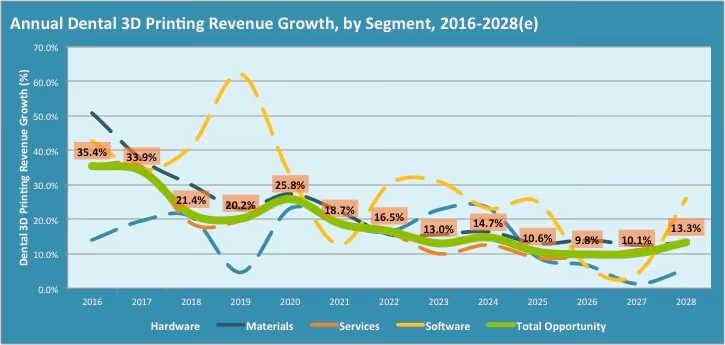
Источник изображения:SmarTech Analysis
Маркетинг 3D-печати в стоматологии резко вырос благодаря потенциалу отрасли по переходу от ручных, трудоемких рабочих процессов к цифровым, повторяемым процессам. В отличие от рынка слуховых аппаратов, где сейчас доминируют неиндивидуализированные продукты, стоматология предлагает возможность перевести более 80% производства на аддитивные методы. Системы фотополимеризации (SLA) от 3DSystems, Carbon и EnvisionTech позволяют быстро и качественно производить стоматологические устройства, сокращая отходы материала и сокращая сроки выполнения работ. These capabilities are positioning AM as the next standard for dental manufacturing worldwide.
What does the AM market look like in non‑European and non‑US territories? Сильно ли отличаются темпы внедрения?
Asia remains a key growth region, with substantial opportunities across China, Japan, and Southeast Asia. Adoption is already significant, though much untapped potential remains. In contrast, the Middle East, Africa, and South America lag behind, largely due to limited access to lower‑cost machines. Экосистемы поставщиков услуг расширяются по всему миру:североамериканские и европейские фирмы устанавливают партнерские отношения в Азии, чтобы извлечь выгоду из аутсорсинга производства и быстрого прототипирования.
To learn more about SmarTech Analysis, visit: https://www.smartechanalysis.com/
3D печать
- 3D-печать Raft, поля и юбка [малоизвестные факты]
- ИИ и аэрокосмическая промышленность:5 способов воздействия искусственного интеллекта на авиацию
- Струйные машины для связующего:подробное руководство по типам, использованию, преимуществам и ограничениям
- Оборудование для 3D-печати из высококачественных материалов
- Ретракция:как это работает в 3D-печати
- Экструзия материалов в 3D-печати:определение, история, применение и рабочий процесс
- Inventor против Fusion 360:выбор подходящего инструмента САПР для ваших проектов
- Стоит ли Simplify3D своих денег? Сравнение с Cura и PrusaSlicer
- Markforged получает награду ACE по производству композитов
- Часть недели - квадрокоптер Самрата