



Обеспечение надёжного тайминга в safety-critical multicore встраиваемых системах
Современные автомобили и самолёты больше не полагаются исключительно на механические компоненты. Их безопасность и производительность зависят от embedded software, запускаемого на сложных heterogeneous multicore процессорах, управляющих всем — от flight control до power steering — с microsecond-level deadlines.
В multicore окружении execution time задачи влияет не только её собственный код, но и другие задачи, делящие те же hardware resources. Это interference может толкнуть систему за safety margins.
Разработка safety-critical embedded software требует multi-million-euro, multi-year усилий. С самых ранних стадий дизайна safety должна быть вшита в архитектуру и timing behavior каждой задачи должен быть rigorously understood для гарантии соблюдения дедлайнов.
Решение головоломки Multicore Timing Analysis
Пока multicore процессоры обещают higher performance, они также вводят contention за shared resources: buses, memory, caches, accelerators. Задача на одном ядре может замедлить задачи на других, создавая unpredictable timing variations.
Ключевые вопросы: Как量化 влияние такого interference? Как analyze, test и document что safety-critical software всегда завершится в своих дедлайнах на multicore платформе?
Industry leaders — Barcelona Supercomputing Center (BSC), Rapita Systems Ltd (RPT), Raytheon Technologies (RTRC), Marelli Europe (MAR) — годами адресуют эти вызовы. BSC и Rapita теперь доставляют solution set, который скоро будет adopted across aerospace и automotive sectors. Success hinges на specialized tooling, automation, и safety-oriented, requirements-driven methodology.
Эта работа подpins MASTECS project, European Commission-funded, multidisciplinary R&D initiative launched December 2019. MASTECS будет зреть технологии и предоставлять proven approach для certifying avionics и automotive systems, с case studies от RTRC и MAR illustrating real-world impact.
State-of-the-Art Tools
Commercial tools excel для single-core analysis но struggle с complexity multicore certification. Limitations включают:
- Static timing analysis tools [1] hit complexity wall, unable to model sophisticated hardware или extremely complex software.
- Measurement-based solutions — пока prevalent в single-core testing (e.g., Rapita's RVS toolset) — lack hardware-expert methodology to produce trustworthy timing bounds для multicore workloads с adequate traceability.
To date, no commercial tool outside MASTECS development effort offers comprehensive multicore timing analysis aligning with safety standards и emerging certification requirements.
Interference Analysis и Control в действии
Cornerstone нашего подхода — structured test methodology, blending hardware и software expertise для генерации evidence of multicore timing behavior. BSC's multicore micro-benchmark technology (MμBT), commercialized by Rapita as RapiDaemons, позволяет дизайнерам создавать interference scenarios, stressing specific shared resources.
Micro-benchmarks — tiny, low-level code snippets — operate at hardware-software interface to impose quantifiable pressure on target resource. Они reveal effect of interference channels и can be tailored to induce, measure, или validate contention. Key attributes включают:
- Targeted, quantifiable pressure on a shared resource.
- Verifiable behavior through event monitors.
- Alignment с specific timing requirements, such as testing mitigation effectiveness.
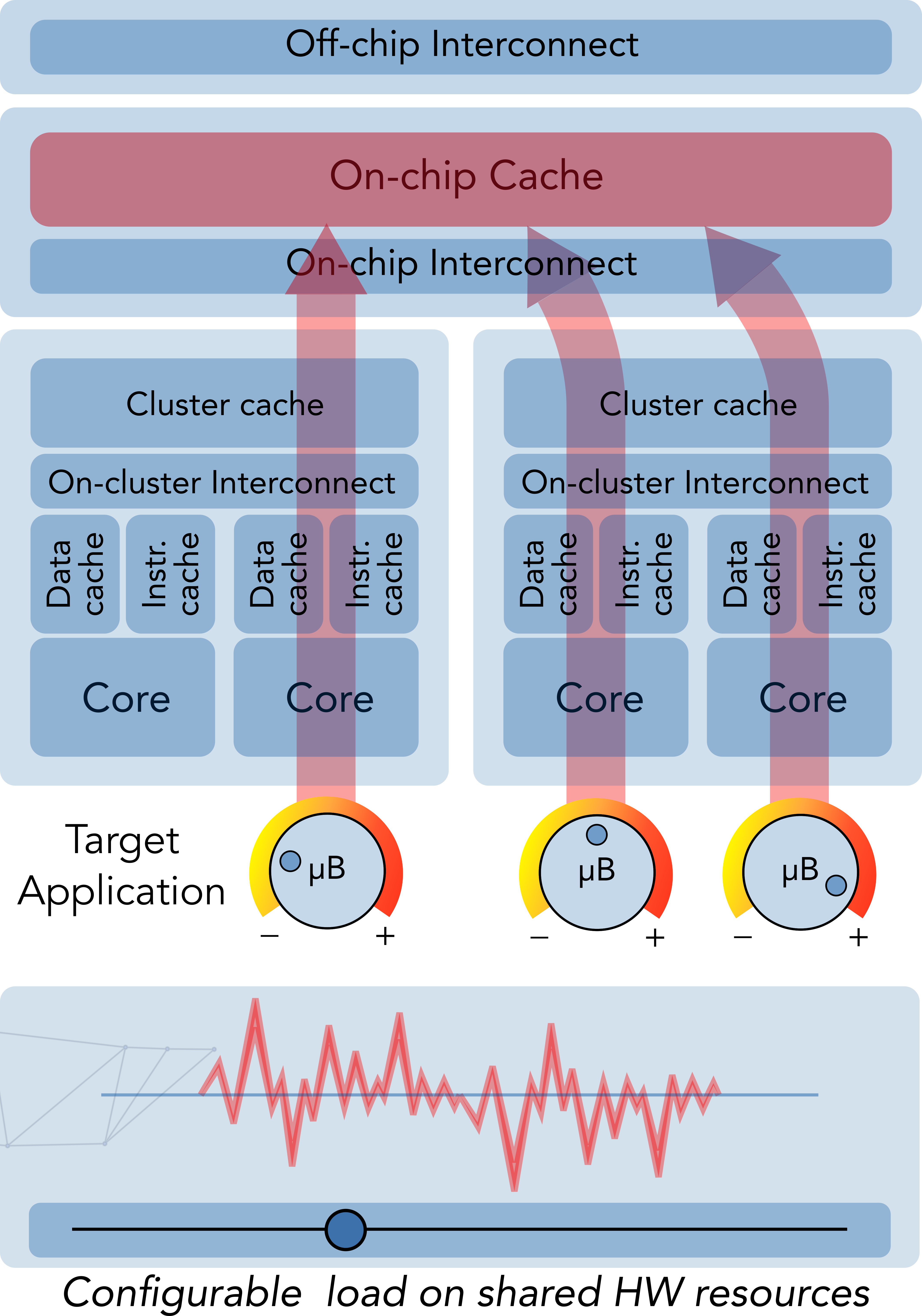
Diverse library micro-benchmarks exists to match desired interference levels, maximize resource impact, или act as sensitive "victim" tests.
При анализе interference мы парь MμBT с Task Contention Model (TCM) that provides early estimates of contention delays. Rapita's RapiTest и RapiTime автоматизируют test creation и execution на embedded target.
Design Methodology
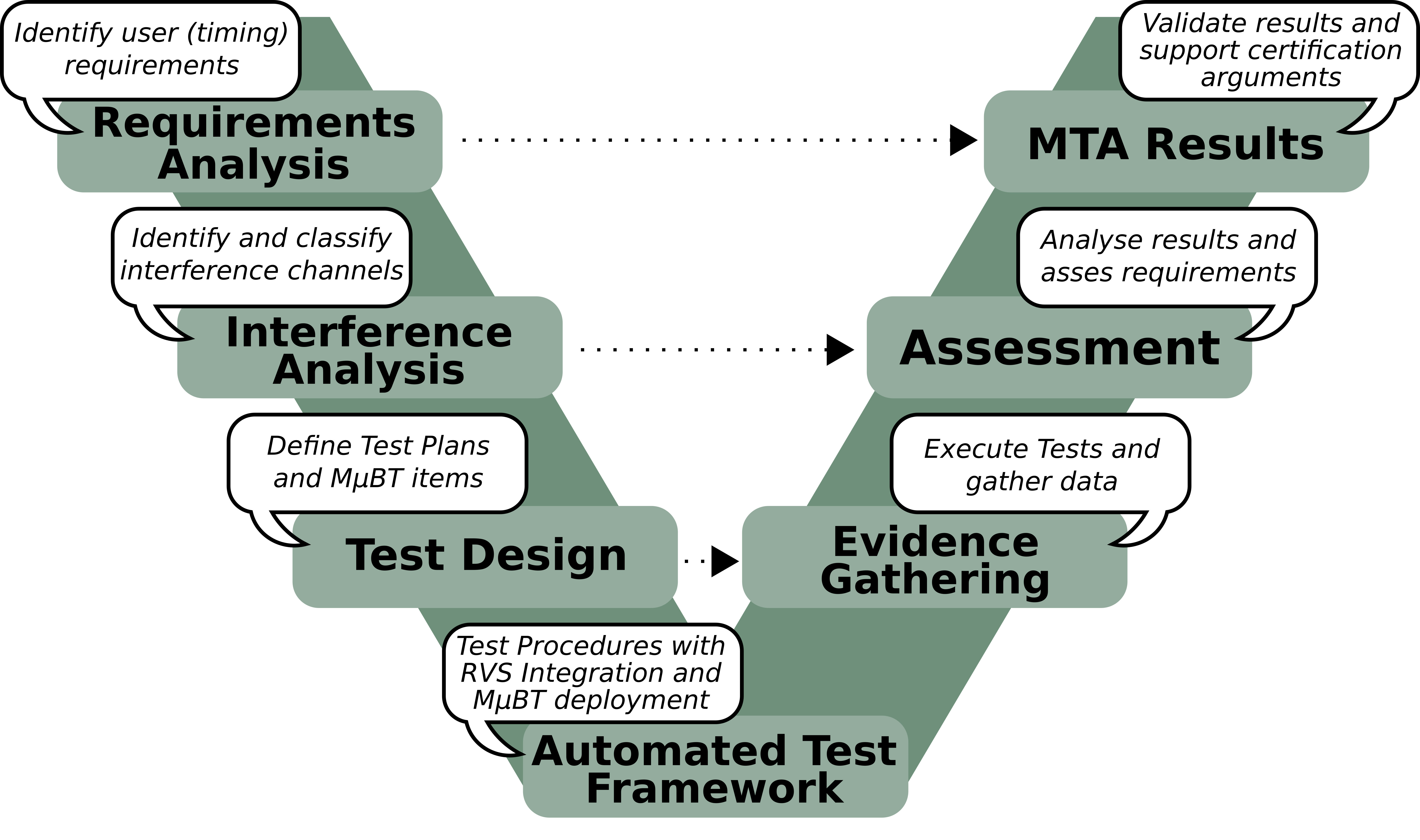
Following a seven-step process integrated into V-model software lifecycle (see Figure 2), engineers gain deep insight into interference effects:
- Hardware configuration & interference channel identification. Hardware experts pinpoint critical settings, interference pathways, и mitigation options, while selecting event monitors для verification.
- Define timing requirements. Capture user-specific needs, risks, и safety constraints, и evaluate hardware isolation strategies.
- Test case design. Craft test descriptions that validate hypotheses, specifying micro-benchmarks needed для interference analysis under isolated и stressed conditions.
- Implement test procedures. Assemble test framework, micro-benchmarks, и measurement probes. Currently manual, this will be automated within MASTECS.
- Gather evidence. Execute tests on target platform, collecting data that ties directly to verification requirements.
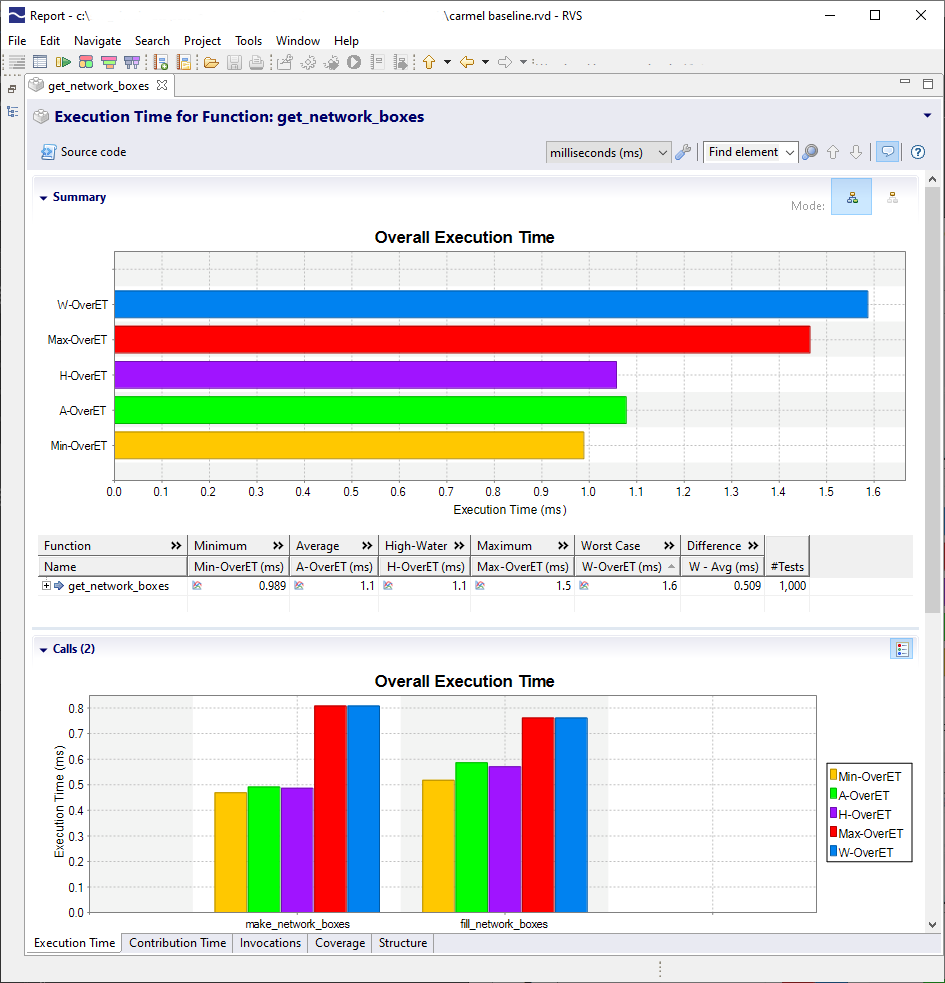
- Analyze results. Technical experts review outcomes against requirements. For example, Figure 3 shows RapiTime's execution-time breakdown.
- Validate & document. Final review, report generation, и qualification artifacts ready for certification submissions.
Hardware Expertise и Timing Analysis Process
Hardware insight vital from outset. Early involvement includes:
- Identifying multicore configurations that shape functional и timing behavior, и determining isolation mechanisms that reduce contention.
- Spotting interference channels by navigating complex processor manuals и consulting vendors for missing details.
- Selecting event monitors that capture task activity on interference channels, и validating them с dedicated micro-benchmarks [2].
- Collaborating с timing analysts to derive requirements и design tests that load specific interference channels.
In later stages, hardware experts assess test results, refine hypotheses, и propose additional tests as needed.
The Bigger Picture
Seven-step design process is part of broader multicore verification methodology (see Figure 2). It delivers full traceability — from evidence и results back to requirements и design — supporting both CAST-32A и ISO 26262. CAST-32A, released by Certification Authorities Software Team (CAST) in 2016, outlines objectives for safe multicore avionics, including interference bounding. EASA и FAA working on unified AMC/AC (AMC 20-193) adaptation expected later this year.
Expertise Cannot Be Automated
Interference dynamics are complex; automated tools can only complement, not replace, seasoned engineers. Multicore experts bring deep knowledge of hardware configurations и interference channels, while software analysts translate requirements into rigorous tests. Human insight essential for validating assumptions, interpreting results, и iterating on designs.
References
- Reinhard Wilhelm. Mixed Feelings about Mixed Criticality. Workshop on Worst-Case Execution Time Analysis, 2018.
- Enrico Mezzetti, Leonidas Kosmidis, Jaume Abella, Francisco J. Cazorla. High-Integrity Performance Monitoring Units in Automotive Chips for Reliable Timing V&V. IEEE Micro 38(1): 56-65 (2018).
- EASA and FAA to issue further guidance on multicore certification this year.
Встроенный
- Отладка в встраиваемых системах: типы, техники и инструменты для надёжного ПО
- Как встроенные системы двигают инновации в современном автомобиле
- Текстовые строки: скрытая уязвимость встроенного ПО
- SOAFEE: облачная-родная архитектура, уполномачивающая программно-определяемые автомобильные платформы
- TRS-STAR EPS-KBLHE: Rugged, безвентиляторные встроенные ПК для бесшумной промышленной автоматизации
- Axiomtek CAPA310: 3.5-дюймовая Embedded SBC для Mission-Critical приложений
- 14 критических уязвимостей в NicheStack TCP/IP стеке подвергают OT-устройства удаленным атакам
- ИИ предсказывает квантовое преимущество: нейросеть прогнозирует поведение систем
- Встроенные системы и системная интеграция: современная архитектура и связность
- Использование DevOps для преодоления сложностей встроенного ПО